
Irregular periods, sudden mood swings, unexplained weight gain, persistent acne — yeh symptoms aksar “bas stress hai” ya “busy lifestyle ka effect hai” kehkar dismiss kar diye jaate hain. Lekin kabhi-kabhi yeh Hormonal Imbalance in Women ke signs ho sakte hain.
Hormones body ke chemical messengers hote hain jo menstrual cycle, fertility, metabolism, mood, sleep, energy aur growth jaise important functions ko regulate karte hain. Jab hormone levels ya hormone signals expected tarike se work nahi karte, toh different physical aur emotional symptoms develop ho sakte hain.
Is article mein hum Hormonal Imbalance in Women ke common symptoms, possible causes, diagnosis, treatment options, lifestyle measures aur doctor se kab consult karna chahiye — in sab ko simple Hinglish mein samjhenge.
Hormonal Imbalance in Women Kya Hai?
Hormones chemical messengers hain jo ovaries, thyroid gland, adrenal glands aur pituitary gland jaise organs aur glands se release hote hain. Hormonal Imbalance in Women ko samajhne ke liye yeh jaan-na important hai ki hormones bloodstream ke through body ke different parts tak travel karke menstrual cycle, fertility, metabolism, mood, sleep aur other important processes ko regulate karte hain.
Hormonal Imbalance in Women tab ho sakta hai jab kisi hormone ka level unusually high ya low ho, ya hormone signals body mein expected tarike se respond na karein.
Important baat yeh hai ki hormonal changes hamesha disease ka indication nahi hote. Puberty, pregnancy, breastfeeding, perimenopause aur menopause ke dauraan hormones naturally fluctuate karte hain.
Concern tab hota hai jab symptoms persistent, severe, unusual ya daily life ko significantly affect karne lagen.
Estrogen aur progesterone jaise reproductive hormones menstrual cycle aur fertility ke saath-saath bone health, cardiovascular health, brain function aur other body processes mein bhi important role play karte hain. Isi wajah se Hormonal Imbalance in Women ka effect sirf periods tak limited nahi hota, balki mood, metabolism, sleep, skin, bones aur overall health par bhi impact pad sakta hai.
Hormonal Imbalance in Women Ke Common Symptoms
Symptoms is baat par depend karte hain ki kaunsa hormone affected hai aur underlying cause kya hai. Common hormonal imbalance symptoms in women mein include ho sakte hain:
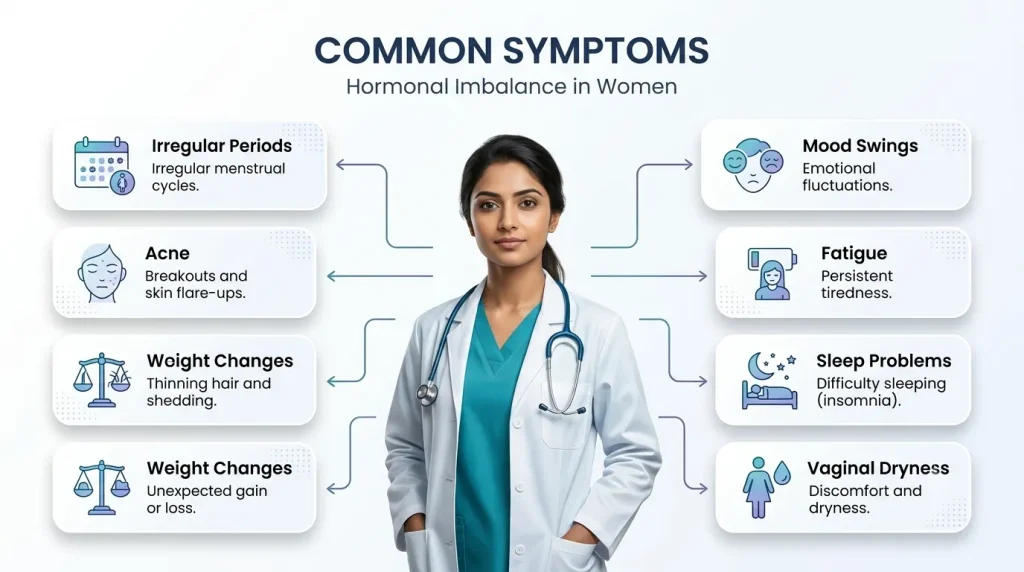
- Irregular ya missed periods
- Heavy ya abnormal menstrual bleeding
- Conceive karne mein difficulty
- Unexplained weight gain
- Weight lose karne mein difficulty
- Persistent acne ya oily skin
- Excess facial ya body hair
- Hair thinning ya hair loss
- Mood swings
- Anxiety ya low mood
- Persistent fatigue
- Sleep problems ya insomnia
- Hot flashes aur night sweats
- Low libido
- Headaches ya migraines
- Vaginal dryness
- Intercourse ke dauraan discomfort ya pain
- Milky nipple discharge, jab pregnancy ya breastfeeding na ho
Yeh symptoms sirf Hormonal Imbalance in Women ki wajah se nahi hote. Stress, thyroid disorders, nutritional issues, certain medications aur other medical conditions bhi similar symptoms cause kar sakti hain. Isliye persistent symptoms hone par sirf hormonal problem assume karne ke bajaye proper medical evaluation karwana important hai.
Agar symptoms persistent hain ya gradually worsen ho rahe hain, toh self-diagnosis ke bajaye qualified doctor se evaluation karwana better hota hai.
Weight Gain Aur Hormonal Imbalance Ka Connection
Hormonal Imbalance in Women ke context mein unexplained weight gain kuch hormonal conditions ke saath associated ho sakta hai, lekin har weight change ka reason hormones nahi hote. Thyroid disorders, menopause-related changes, medications, lifestyle factors aur other medical conditions bhi weight gain ko influence kar sakte hain. Kuch examples:
- Hypothyroidism: Thyroid hormone kam hone par metabolism aur other body functions slow ho sakte hain, aur kuch people mein weight gain ho sakta hai.
- Menopause: Menopause ke around hormonal changes ke saath body composition aur fat distribution change ho sakte hain.
- Cushing syndrome: Yeh rare condition excess cortisol se associated hoti hai aur weight gain, particularly face aur trunk ke around, ho sakta hai.
Isliye unexplained weight gain ko sirf “hormonal problem” assume nahi karna chahiye.
Anxiety Aur Hormonal Changes Ka Connection
Hormonal Imbalance in Women mood aur nervous system ke functions ko influence kar sakta hai. Thyroid disorders, menopause-related hormonal changes aur chronic stress ke effects kuch women mein anxiety, irritability ya mood changes ke saath associated ho sakte hain. Lekin anxiety ya mood changes ke multiple causes ho sakte hain, isliye in symptoms ko sirf hormonal problem assume karne ke bajaye proper evaluation karwana important hai.
Lekin anxiety ke bahut saare possible causes hote hain. Isliye anxiety hone ka matlab automatically Hormonal Imbalance in Women nahi hota.
Hormonal Imbalance in Women Ke Causes
Hormonal imbalance causes different ho sakte hain. Kuch hormonal changes life stages ka normal part hote hain, jabki kuch underlying medical conditions ki wajah se develop hote hain.
1. Natural Life Stages
Hormonal Imbalance in Women ko samajhte waqt yeh important hai ki puberty, pregnancy, breastfeeding, perimenopause aur menopause ke dauraan hormones naturally change hote hain. Har hormonal fluctuation treatment require nahi karta. Hormonal Imbalance in Women ka treatment symptoms, severity, underlying cause aur individual health needs par depend karta hai.
2. PCOS
Polycystic Ovary Syndrome (PCOS) reproductive-age women mein common hormonal and metabolic condition hai. PCOS ke saath irregular ovulation, irregular periods, acne, excess facial or body hair aur fertility difficulties ho sakti hain.
3. Thyroid Disorders
Hypothyroidism aur hyperthyroidism Hormonal Imbalance in Women se associated ho sakte hain aur menstrual cycles, energy levels, metabolism, heart rate, mood aur weight ko affect kar sakte hain. Thyroid-related symptoms hone par doctor thyroid function tests recommend kar sakta hai, jisse thyroid hormone levels evaluate karke appropriate treatment decide kiya ja sake.
4. Diabetes Aur Insulin Resistance
Insulin resistance aur metabolic problems reproductive health ko affect kar sakti hain. PCOS ke context mein insulin resistance bhi commonly discuss ki jaati hai.
5. Chronic Stress
Long-term stress body ke stress-response system ko affect kar sakta hai. Cortisol aur other physiological responses mein changes sleep, appetite, mood aur menstrual cycle ko influence kar sakte hain. Lekin stress ko har hormonal symptom ka sole cause nahi maana jaana chahiye.
6. Certain Medications
Kuch medicines hormone levels ya reproductive function ko influence kar sakti hain. Examples mein hormonal contraceptives, corticosteroids aur kuch fertility-related medicines include ho sakti hain. Medication khud se stop ya change nahi karni chahiye. Doctor se discuss karna important hai.
7. Significant Weight Change Ya Poor Nutrition
Severe calorie restriction, eating disorders, rapid weight loss ya inadequate nutrition Hormonal Imbalance in Women ko contribute kar sakte hain, kyunki yeh reproductive hormone function ko affect kar sakte hain aur periods irregular ho sakte hain.
8. Pituitary, Adrenal Ya Ovarian Conditions
Pituitary gland, adrenal glands ya ovaries se related certain disorders hormone production ko affect kar sakte hain.
9. High Prolactin Levels
Prolactin hormone ka level unusually high hone par ovulation aur menstrual cycle affect ho sakte hain. Kuch women mein irregular periods, missed periods ya nipple discharge ho sakta hai.
Rare Lekin Important Causes
Most hormonal symptoms common conditions se related hote hain, lekin kuch less-common causes bhi possible hain.
Tumors Ya Adenomas
Pituitary ya adrenal glands mein kuch tumors hormone production ko influence kar sakte hain aur Hormonal Imbalance in Women ka possible cause ho sakte hain. Many endocrine tumors benign hote hain, lekin appropriate medical evaluation important hoti hai taaki hormone-related changes ka underlying cause accurately identify kiya ja sake.
Gland Damage
Surgery, radiation therapy, severe illness ya significant blood loss ke kuch cases mein endocrine glands ki function affect ho sakti hai.
Autoimmune Conditions
Kuch autoimmune diseases endocrine glands ko affect kar sakti hain. Hashimoto’s thyroiditis aur Type 1 diabetes examples hain. Yeh causes relatively uncommon ho sakte hain, lekin persistent ya unexplained symptoms Hormonal Imbalance in Women ka indication ho sakte hain. Aise cases mein doctor appropriate evaluation ke through possible underlying causes identify kar sakta hai aur zaroorat ke according further tests recommend kar sakta hai.
Hormonal Imbalance in Women Ka Diagnosis Kaise Hota Hai?
Diagnosis sirf ek hormone test se nahi hoti. Doctor usually symptoms, menstrual history, medical history, medications, lifestyle aur other health factors ko evaluate karta hai. Physical examination bhi ki ja sakti hai.
Symptoms ke according following tests consider kiye ja sakte hain:
Pregnancy Test
Reproductive-age women mein missed periods ya abnormal bleeding hone par pregnancy test evaluation ka important initial step ho sakta hai.
Blood Tests
Symptoms ke basis par doctor thyroid hormones, prolactin, reproductive hormones, testosterone ya other relevant hormones test kar sakta hai. Har woman ke liye same hormone tests required nahi hote.
Pelvic Ultrasound
Pelvic ultrasound uterus aur ovaries ko evaluate karne mein useful ho sakta hai. PCOS, ovarian cysts ya other pelvic conditions ke evaluation mein iska use symptoms aur clinical findings ke according kiya ja sakta hai.
Imaging Tests
Agar Hormonal Imbalance in Women ke evaluation ke dauraan pituitary, adrenal ya another structural problem suspected ho, toh doctor MRI, CT ya other imaging tests recommend kar sakta hai taaki underlying cause ko accurately identify kiya ja sake.
Important: Hormone levels menstrual cycle ke different phases, pregnancy, medications aur other factors se change ho sakte hain. Isliye test results ko symptoms aur clinical history ke context mein interpret karna important hai.
Hormonal Imbalance in Women Ka Treatment
Hormonal imbalance treatment underlying cause, symptoms, age, overall health aur pregnancy goals par depend karta hai. Treatment ka objective sirf hormones ko “balance” karna nahi, balki underlying condition ko identify aur manage karna hota hai.
Hormonal Medicines
Selected cases mein hormonal contraceptives, progesterone-based treatment, menopausal hormone therapy ya other hormone-related medicines prescribe ki ja sakti hain. Har treatment har woman ke liye suitable nahi hota, isliye doctor ki advice important hai.
Underlying Condition Ki Treatment
Agar thyroid disorder, diabetes, PCOS ya another medical condition Hormonal Imbalance in Women ke symptoms ka cause hai, toh us underlying condition ka appropriate management symptoms ko improve karne aur overall hormonal health ko support karne mein help kar sakta hai.
Fertility Treatment
Agar hormonal or ovulation-related problems conception ko difficult bana rahe hain, toh gynecologist ya fertility specialist ovulation medicines ya other fertility treatments recommend kar sakta hai.
Surgery
Selected cases mein surgery ki zaroorat ho sakti hai, especially agar a structural problem ya hormone-producing tumor treatment ko require karta ho. Treatment choice individual diagnosis par depend karti hai.
Lifestyle Measures Jo Hormonal Health Support Kar Sakte Hain
Lifestyle changes har hormonal condition ka cure nahi hain, lekin overall health aur symptom management ko support kar sakte hain.
1. Balanced Diet
Fruits, vegetables, whole grains, lean proteins, healthy fats aur adequate fiber ko diet ka part banayein. Highly processed foods aur excess added sugar ko limit karna overall health ke liye helpful ho sakta hai.
2. Healthy Weight Maintain Karein
Healthy weight maintain karna metabolic health ke liye beneficial hai. PCOS jaise conditions mein individualized weight-management strategies kuch symptoms improve karne mein help kar sakti hain.
3. Regular Physical Activity
Adults ke liye generally at least 150 minutes of moderate-intensity physical activity per week ka target use kiya jaata hai, along with muscle-strengthening activities as appropriate.
4. Stress Management
Yoga, meditation, breathing exercises, hobbies aur regular physical activity stress management mein help kar sakte hain.
5. Quality Sleep
Most adults ko approximately 7–9 hours ki sleep ki zaroorat hoti hai. Consistent sleep schedule maintain karna overall metabolic aur mental health ke liye beneficial ho sakta hai.
6. Smoking Avoid Karein
Smoking overall reproductive, cardiovascular aur bone health ko negatively affect kar sakti hai. Smoking avoid karna important hai.
7. Alcohol Limit Karein
Alcohol consumption ko limit karna overall health ke liye beneficial ho sakta hai.
8. Supplements Doctor Se Discuss Karein
Vitamin D, iron, B12 ya other supplements tab useful ho sakte hain jab deficiency identified ho ya doctor specifically recommend kare. “Natural” ya herbal supplement automatically safe nahi hota. Kuch supplements medicines ke saath interact kar sakte hain.
Hormonal Imbalance in Women Ke Long-Term Complications
Untreated underlying conditions kuch women mein long-term health complications ka risk increase kar sakti hain. Possible complications cause ke according vary karte hain and may include:
- Infertility
- Pregnancy complications
- Type 2 diabetes
- Cardiovascular risk
- Osteoporosis
- Sleep problems
- Sexual health problems
- Endometrial hyperplasia
- Mental health difficulties
Yeh complications har woman mein develop nahi hote. Risk underlying condition, duration, age aur other health factors par depend karta hai.
Isliye persistent symptoms ko ignore karne ke bajaye timely medical evaluation important hai.
Prevention Tips
Har hormonal condition ko prevent karna possible nahi hota, especially genetic or age-related conditions ko.
Lekin overall health support karne ke liye:
- Regular health checkups karayein.
- Menstrual cycle track karein.
- Existing thyroid, diabetes ya other conditions ko properly manage karein.
- Hormonal medicines doctor ki advice ke according use karein.
- Balanced diet maintain karein.
- Regular physical activity karein.
- Healthy sleep routine maintain karein.
- Smoking avoid karein aur alcohol limit karein.
- Persistent ya unusual symptoms ko ignore na karein.
- Supplements start karne se pehle healthcare professional se discuss karein.
Kab Doctor Se Mile?
Occasional hormonal fluctuations normal ho sakte hain, especially puberty, pregnancy, breastfeeding, perimenopause aur menopause ke during. Lekin following symptoms doctor consultation deserve karte hain:
- Bahut heavy ya unusual menstrual bleeding
- Repeatedly irregular ya missed periods
- 3 months ya usse zyada periods na aana, jab pregnancy expected explanation na ho
- Conceive karne mein difficulty
- Persistent acne ya excessive hair growth
- Significant hair loss
- Unexplained weight gain ya weight loss
- Severe ya persistent mood changes
- Frequent hot flashes ya night sweats
- Vaginal dryness ya painful intercourse
- Persistent fatigue
- Sleep problems
- Thyroid-related symptoms, such as unusual heart-rate changes or neck swelling
- Pregnancy ya breastfeeding ke bina milky nipple discharge
- Menopause ke baad vaginal bleeding
Severe symptoms, sudden changes ya concerning bleeding ko medical evaluation ki zaroorat ho sakti hai.
Myth vs Fact
Myth: Hormonal Imbalance in Women Sirf Periods Ka Issue Hai
Fact: Hormonal changes periods ke saath-saath fertility, skin, hair, metabolism, sleep, mood aur other body functions ko bhi affect kar sakte hain.
Myth: Ek Vitamin Ya Supplement Hormonal Imbalance Cure Kar Sakta Hai
Fact: Koi single vitamin ya supplement all types of hormonal problems ka cure nahi hai. Agar nutritional deficiency present hai, toh usko correct karna helpful ho sakta hai, lekin underlying condition ka appropriate treatment important hai.
Myth: Stress Sirf Mental Health Ko Affect Karta Hai
Fact: Chronic stress body ke stress-response system ko affect kar sakta hai aur sleep, appetite, mood aur menstrual function par impact daal sakta hai.
Myth: Har Hormonal Change Abnormal Hai
Fact: Puberty, pregnancy, breastfeeding, perimenopause aur menopause ke during hormonal changes naturally occur karte hain. Concern mainly persistent, severe ya unusual symptoms mein hota hai.
FAQs About Hormonal Imbalance in Women
Q1. Kya Hormonal Imbalance in Women Fertility Ko Affect Kar Sakta Hai?
Haan. Kuch hormonal conditions ovulation ko disrupt kar sakti hain, jisse naturally conceive karna difficult ho sakta hai. PCOS aur thyroid disorders examples hain, although fertility problems ke other causes bhi ho sakte hain.
Q2. Hormonal Imbalance in Women Kitne Time Tak Rehta Hai?
Hormonal Imbalance in Women ki duration underlying cause par depend karti hai. Temporary hormonal changes time ke saath resolve ho sakte hain, jabki PCOS ya thyroid disorders jaise conditions ko long-term management aur regular medical follow-up ki zaroorat ho sakti hai.
Q3. Main Apna Hormonal Imbalance Kaise Check Karu?
Self-testing ke bajaye doctor se evaluation karwana better hai. Doctor symptoms aur medical history assess karke appropriate blood tests, ultrasound ya other investigations recommend kar sakta hai.
Q4. Kaunsi Deficiency Hormonal Imbalance Cause Karti Hai?
Nutritional deficiencies overall health aur certain body functions ko affect kar sakti hain, lekin hormonal symptoms ka common explanation sirf vitamin deficiency nahi hota. PCOS, thyroid disorders, reproductive life-stage changes aur other medical conditions bhi possible causes hain.
Q5. Kya Stress Hormonal Imbalance in Women Cause Kar Sakta Hai?
Chronic stress body ke cortisol-related stress response ko affect kar sakta hai aur sleep, appetite, mood aur menstrual function par impact daal sakta hai. Lekin persistent symptoms ko sirf stress maan lena appropriate nahi hai.
Q6. Kaunsa Vitamin Hormonal Imbalance Ke Liye Achha Hai?
Koi single vitamin hormonal imbalance ka universal treatment nahi hai. Agar blood tests ya clinical evaluation se deficiency identify hoti hai, toh doctor appropriate supplementation recommend kar sakta hai.
Q7. Kya Endocrinologist Se Milna Zaroori Hai?
Har case mein endocrinologist ki zaroorat nahi hoti. General physician ya gynecologist initial evaluation aur treatment kar sakte hain. Complex endocrine conditions mein endocrinologist referral useful ho sakta hai.
Q8. Kya Hormonal Imbalance Age Ke Saath Badhta Jaata Hai?
Zaroori nahi. Kuch hormonal changes age-related life stages, especially perimenopause aur menopause, ke saath naturally occur karte hain. Lekin PCOS, thyroid disorders aur other conditions different ages mein develop ho sakti hain.
Q9. Kya Dietary Supplements Bina Doctor Consultation Ke Lena Safe Hai?
Hormonal Imbalance in Women ke symptoms ke liye har supplement safe ya necessary nahi hota. Herbal aur dietary supplements medicines ke saath interact kar sakte hain ya kuch health conditions mein unsuitable ho sakte hain. Isliye koi supplement start karne se pehle healthcare professional se discuss karna better hai.
Conclusion
Hormonal Imbalance in Women ek single disease nahi hai, balki different hormonal changes aur underlying conditions ko describe karne ke liye commonly used term hai. Hormonal changes menstrual cycles, fertility, mood, skin, hair, metabolism, sleep aur overall health ko affect kar sakte hain. Kuch changes life stages ka normal part hote hain, lekin persistent, severe ya disruptive symptoms ko ignore nahi karna chahiye.
PCOS, thyroid disorders, chronic stress, certain medications, metabolic conditions aur life-stage changes hormonal symptoms ke possible reasons ho sakte hain. Accurate diagnosis ke liye symptoms, medical history aur appropriate investigations ko saath mein consider karna important hai.
Healthy diet, regular physical activity, quality sleep aur stress management overall health ko support kar sakte hain, lekin lifestyle changes underlying medical condition ka replacement nahi hain.
Agar aapko persistent irregular periods, unexplained weight changes, fertility difficulties, unusual hair growth or hair loss, severe mood changes, nipple discharge ya other concerning symptoms ho rahe hain, toh qualified gynecologist, physician ya appropriate healthcare professional se consult karein.
Apne symptoms ko clearly describe karna — kab start hue, kitne frequent hain, kya trigger karta hai aur menstrual cycle ke saath kya pattern hai — doctor ko accurate evaluation aur appropriate treatment plan develop karne mein help kar sakta hai.
Medical Disclaimer: Yeh article sirf general educational information ke liye hai aur professional medical advice, diagnosis ya treatment ka substitute nahi hai. Kisi bhi persistent, severe ya unusual symptom ke liye qualified healthcare professional se consultation karein.