
Women’s health ek topic hai jo aksar tab discuss hota hai jab kuch already galat ho chuka ho lekin reality mein yeh ek ongoing, life-long journey hai jo proactively manage karni chahiye. Har decade mein body ki zaroorat different hoti hai, aur Women’s health ko samajhna matlab hai apni body ke saath ek informed, respectful relationship banana.
Yeh guide ek complete Women’s health overview hai kya track karna chahiye, kab, aur kyun. Isko ek starting point samajhiye, jahan se aap deeper topics (jaise PCOS, hormonal imbalance, fertility) explore kar sakti hain jo humne is series ke doosre articles mein detail se cover kiye hain.
Women’s Health Har Decade Mein Kyun Change Hoti Hai
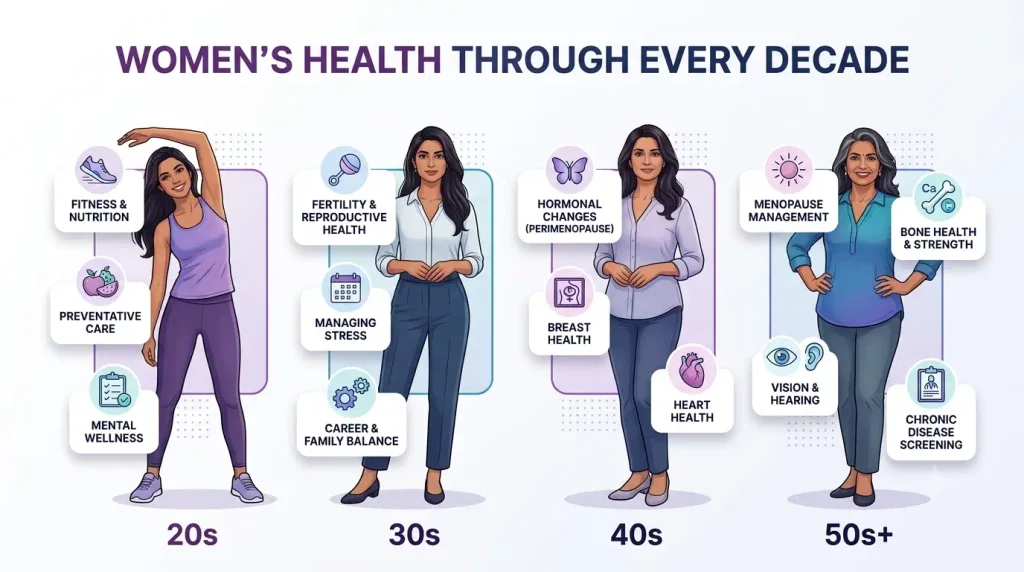
Jo aapke 20s mein kaam karta tha, woh zaroori nahi 40s mein bhi wahi relevant ho. Women’s health is baat pe based on hormones, metabolism, aur body ki priorities, life stages ke saath evolve hoti hain. Isliye ek single, generic advice sabke liye kaam nahi karti age-appropriate approach zyada meaningful hoti hai.
20s Mein Women’s Health Ki Foundation
Yeh decade baseline set karta hai. Basic screenings jaise Pap smear, HPV vaccination, aur thyroid check is age mein shuru karna sahi rahega. Mental health pe bhi dhyan dena zaroori hai poor sleep, irregular eating, ya “always on” rehna stress ke early signs hote hain.
Weekly kam se kam 150 minutes moderate activity, 5 din yeh ek achha target hai jo hormones, bone density, aur cardiovascular health teeno ko support karta hai. Extreme diets avoid karein; long-term nutrition pe focus karna better rahega.
30s Mein Women’s Health Ka Balance
Career, relationships, aur fertility conversations sab is decade mein crowd karte hain. Ek reliable gynaecologist se regular connection banana zaroori ho jaata hai. Cholesterol, blood pressure, aur glucose levels ke baseline checks karayein. Agar timing ko lekar unsure hain, toh reproductive health evaluation consider karein.
Is phase mein strength training weekly 2 baar add karein, calcium aur vitamin D adequate intake ensure karein, aur kam se kam 8 ghante ki sleep prioritize karein.
40s Mein Women’s Health Ka Shift
Hormonal transitions are decade mein shuru hote hain kuch ke liye gradually, kuch ke liye sharply. Yeh menopause approach karne ka time hota hai. First mammogram is decade mein schedule karna common hai. Bone density, thyroid panels, aur metabolic markers seriously lene chahiye. Irregular cycles, mood shifts, aur unexplained fatigue ko ignore na karein yeh menopause approach karne ke common signs hain.
Nutrition mein protein, fiber, aur antioxidants include karna is phase mein especially helpful hota hai.
Yeh bhi ek zaroori period hai jab Women’s health conversations honestly happen karni chahiye partner ya close family ke saath perimenopause symptoms (chaise hot flashes, sleep disruption, mood changes) real gain, aur inhe silently endure karna zaroori nahi.
50s Mein Women’s Health Ki Priority
Menopause usually is decade tak settle ho jaati hai. Hormonal therapy right fit hai ya nahi, yeh doctor ke saath discuss karna zaroori hai. Cardiovascular risks badh jaate hain, isliye heart health bigger priority ban jaati hai. Colorectal cancer screening, aur zaroorat padne par mammograms aur bone scans continue karayein. Muscle loss ko watch karein resistance training often ignored hoti hai, lekin yeh is age mein especially beneficial hai.
Women’s Health Key Core Pillars
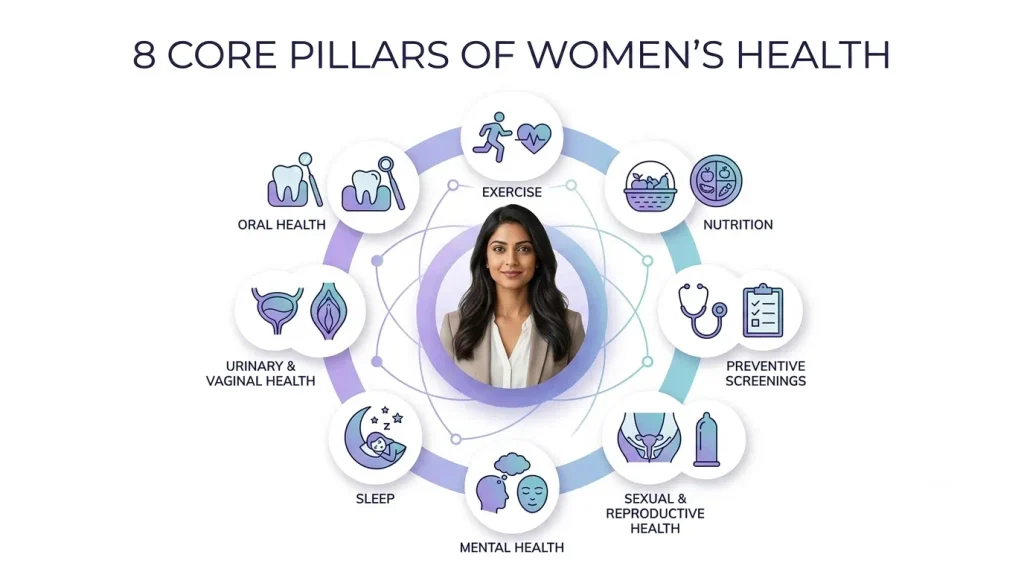
Age-wise specifics ke alawa, kuch foundational pillars hain jo har stage pe Women’s health ko support karte hain:
1. Regular Exercise
Heart disease ek leading concern hai, aur exercise iske against ek sabse effective protection hai. Weekly 150 minutes moderate ya 75 minutes vigorous activity target rakhein walking, jogging, dancing, ya swimming. Cardio ke saath strength training bhi add karein, kam se kam weekly 2 din, kyunki yeh muscle, metabolism, aur bone health teeno ko support karta hai.
2. Balanced, Nutrient-Rich Diet
Fresh fruits, vegetables, whole grains, fiber-rich foods, healthy fats, or lean protein yeh Women’s health ki nutritional foundation hain. Processed foods, excess sugar, or unhealthy fats limit karma heart disease, stroke, aur kuch cancers ka risk kam karta hai.
Kuch nutrients Women’s health mein especially critical role play karte hain:
- Iron- menstruation ki wajah se women mein iron deficiency ka risk zyada hota hai; leafy greens, lean meat, aur legumes achhe sources hain
- Calcium aur Vitamin D- bone health ke liye foundational, especially perimenopause aur menopause ke around jab bone density naturally kam hone lagti hai
- Folate- reproductive age mein especially important, pregnancy planning ke context mein bhi
- Omega-3 fatty acids- hormonal balance aur heart health dono ko support karte hain
Breakfast skip karna ek common lekin harmful habit hai body ko fasting ke baad refuel karne ki zaroorat hoti hai, jo metabolism aur energy levels dono ko affect karta hai.
3. Preventive Screenings
Annual checkups pelvic exams, Pap smears, mammograms, blood pressure, cholesterol, air blood sugar early detection ke liye critical hain. Family history of chronic conditions (diabetes, high BP, cancer) hone par yeh checkups aur bhi zyada important ho jaate hain.
4. Sexual Aur Reproductive Health
Yeh Women’s health ka ek core, ongoing hissa hai change with STI protection, family planning, ya regular gynaecological visits hon. Life ke different stages mein yeh needs change hoti hain jaise later years mein libido, lubrication, ya comfort-related concerns aana. Research yeh dikhati hai ki good sexual health higher quality of life aur lower anxiety/depression se linked hoti hai.
Menstrual cycle tracking bhi Women’s health ka ek practical, actionable hissa hai. Cycle length, flow pattern, aur associated symptoms track karna irregularities ko early identify karne mein madad karta hai. Agar pregnancy planning delay karne ka soch rahi hain, toh fertility conversations gynaecologist ke saath early start karna empowering ho sakta hai kuch women mein fertility decline as early as early-to-mid 30s shuru ho sakti hai, ialite awareness helpful hai, panic nahi. Want to understand intimacy and sexual wellness better? Explore Intimacy Gyan for practical, expert-backed information on relationships, intimacy, sexual wellness, and communication.
5. Mental Health Aur Stress Management
Chronic stress, high blood pressure, gastrointestinal issues, sleep problems, or mental health conditions sabko trigger kar sakta hai. Therapy, meditation, yoga, exercise, ya journaling yeh sab helpful strategies hain jo Women’s health ke emotional side ko support karti hain.
6. Quality Sleep
7-9 ghante ki consistent, quality sleep har system ko support karti hai mood se lekar hormone balance tak. Consistent sleep schedule, dark aur cool room, aur late-day caffeine/alcohol avoid karna sleep hygiene improve karta hai.
7. Urinary Air Vaginal Health
Women mein UTIs comparatively common hote hain, partly shorter urethra ki wajah se. Adequate hydration aur proper hygiene infections ka risk kam karte hain. Urinary retention, frequent urination, blood in urine, ya painful urination jaise symptoms turant doctor attention deserve karte hain.
Vaginal health bhi Women’s health ka ek significant, often under-discussed part hair. Regular gynaecological visits, safe intimate hygiene practices, or unusual discharge ya discomfort ko notice karna yeh sab infections ko early catch karne mein madad karte hain. Cervical aur uterine health ke risk ko bhi proper hygiene aur regular screening kam karti hai. Humne is topic pe alag, detailed articles bhi likhe hain, jo specifically vaginal health habits aur discharge-related concerns cover karte hain.
8. Oral Health
Daily brushing, flossing, or regular dental checkups Women’s health ke often-overlooked hisse hain. Tobacco avoid karna aur hydration maintain karna oral health ko bhi support karta hai.
9. Smoking Aur Alcohol Se Bachav
Smoking Women’s health ke almost har aspect ko negatively affect karti hai nicotine addiction, lung diseases, cardiovascular risk, fertility issues, aur worsening oral health, in sab mein contribute karti hai. Secondhand smoke bhi equally dangerous ho sakta hai. Heavy alcohol consumption bhi similar risks laata hai, especially heart aur liver health ke liye. Yeh dono habits chhodna ya significantly limit karna Women’s health ka ek high-impact, immediately actionable step hai.
Common Conditions Jo Women’s Health Ko Affect Karti Hain
Yeh conditions aksar Women’s health conversations mein aati hain, aur humne isi series ke alag articles mein inhe detail se cover kiya hai:
- PCOS (Polycystic Ovary Syndrome)- hormonal imbalance jo periods, weight, or fertility affect karta hai
- Hormonal imbalance- irregular periods, mood swings, or unexplained fatigue cause symptoms se juda
- Period pain- jo normal ho sakta hai, lekin severe cases mein underlying condition (jaise endometriosis) ka sign bhi ho sakta hai
- Vaginal health issues- infections, discharge changes, jo proper hygiene is timely medical attention se manage hoti hain
- Breast health concerns- self-examination or regular screening junk through early detection possible hair
- Fertility challenges- jo lifestyle, age, aur underlying conditions se linked ho sakte hain
Preventive Screenings Age-Wise Summary
| Age Range | Key Screenings |
| 20s | Pap smear, HPV vaccination, thyroid check |
| 30s | Cholesterol, blood pressure, glucose, reproductive health evaluation |
| 40s | Mammogram, bone density, thyroid panel, metabolic markers |
| 50s+ | Colorectal cancer screening, bone scans, continued mammograms, cardiovascular monitoring |
The general guidelines gain individual risk factors (family history, existing conditions) ke hisaab se doctor specific timeline recommend karega.
Annual Checkups Kyun Non-Negotiable Hain
“Main toh bilkul theek feel kar rahi hoon, checkup ki kya zaroorat” yeh soch Women’s health mein sabse common aur sabse risky mistake hai. Kayi conditions (jaise early-stage high blood pressure, high cholesterol, ya cervical changes) bina koi visible symptom diye develop hote hain. Annual checkup ka poora purpose hi yeh hai ki jo aapko khud pata nahi chal raha, woh doctor detect kar le jab tak condition treat karna aasan ho, complicated nahi.
Family history of chronic conditions (diabetes, high blood pressure, cancer) hone par yeh checkups aur bhi zyada priority ban jaate hain, kyunki genetic risk ko early monitoring se better manage kiya ja sakta hai.
Breast Cancer Prevention Ek Zaroori Highlight
Breast cancer Women’s health discussions mein ek significant concern hai. Family ya personal history risk badhata hai, lekin kuch preventable factors bhi hain alcohol kam karna, moderate weight maintain karna, aur regular exercise. Average risk wale purushon ke liye 40-74 age ke beech every-two-years mammogram screening generally recommend kiya jaata hai, though exact frequency doctor se confirm karna sahi rahega.
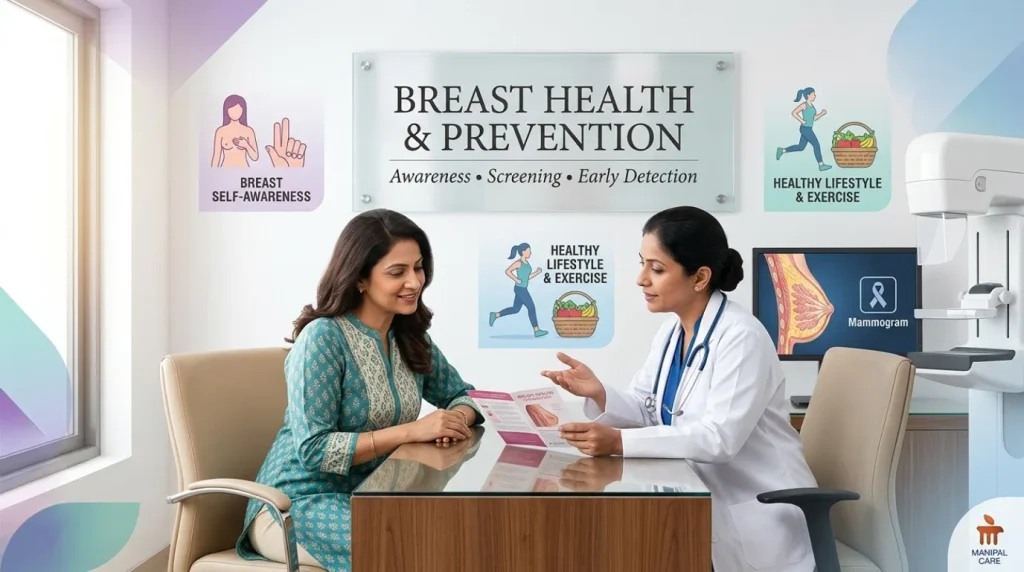
Self-awareness bhi ek important, cost-free tool hai. Regular self-examination apne breast tissue ki normal texture aur shape se familiar hona kisi bhi unusual change (lump, dimpling, discharge) ko early notice karne mein madad karta hai. Yeh professional screening ka replacement nahi hai, lekin ek valuable complement hai. Isi topic pe humne is series mein ek dedicated, step-by-step guide bhi likha hai.
Habits Jo Chhodni Chahiye
- Symptoms ignore karna jab tak function disrupt na ho early attention behtar recovery deta hai
- Annual checkups skip karna preventive screenings optional nahi hain
- Restrictive diets ya detox trends pe depend karna whole foods sustainable Women’s health ke liye better foundation hain
- Fatigue ko caffeine/sugar se manage karna yeh energy ko borrow karta hai, genuinely provide nahi karta
- Pain ko “normal womanhood” samajhna period pain, pelvic discomfort, chronic fatigue kisi ko bhi brush aside nahi karna chahiye
- Sleep ko negotiable treat karna yeh passive nahi, ek active repair process hai
Myth Vs Fact
| Myth | Fact |
| Women’s health sirf reproductive organs tak limited hai. | Women’s health heart, bones, mental health, metabolism aur overall well-being ko bhi cover karti hai. Reproductive health sirf poori picture ka ek hissa hai. |
| Agar symptoms mild hain, toh doctor ko dikhana zaroori nahi. | Mild symptoms ko ignore nahi karna chahiye. Early attention se conditions ko manage karna easier ho sakta hai. Mild symptoms kisi larger health pattern ka part bhi ho sakte hain. |
| Sirf older women ko preventive screenings ki zaroorat hai. | Preventive screenings young age se bhi relevant hoti hain. Pap smear, thyroid checks jaise basics age aur individual health needs ke according important ho sakte hain. |
| Women’s health advice sirf doctors ya hospitals se hi milni chahiye; online information helpful nahi hoti. | Reliable, well-researched online resources awareness build karne mein helpful ho sakte hain. Lekin online information professional medical advice ka replacement nahi hai. Best approach hai: information se aware raho aur doctor se personalized guidance lo. |
Conclusion
Women’s health ek lifelong, evolving journey hai koi single checklist ya one-time fix nahi. Har decade apni priorities laata hair, lekin foundational habits (exercise, balanced diet, quality sleep, stress management, or regular screenings) had stage pe relevant rehte hain. Sabse important step hai apni body ko seriously lena symptoms ignore na karna, checkups skip na karna, aur zaroorat padne par bina hesitation doctor se baat karna. Agle articles mein hum PCOS, hormonal imbalance, period pain, aur doosre specific topics ko detail mein explore karenge, taaki aapke paas ek genuinely complete Women’s health resource ho.
Yeh yaad rakhna zaroori hai ki Women’s health advocacy khud se shuru hoti hai apne symptoms ko articulate karna, doctor se sawal poochna, aur “yeh normal hai” wali baat ko without questioning accept na karna. Jitna aap apni body ko samjhengi, utna hi confident aur informed decisions le paayengi apni health ke baare mein, chahe woh choti daily habits ho ya bade medical decisions.
FAQs
Q1. Women’s health ka sabse important pillar kya hai?
Koi single pillar sabse important nahi hai exercise, diet, sleep, mental health, aur regular screenings sab combine hone pe best Women’s health outcome dete hain.
Q2. Kis age se preventive screenings shuru karni chahiye?
20s se hi basic screenings (Pap smear, thyroid) relevant hain. Age ke saath additional screenings (mammogram, bone density) add hoti hain.
Q3. Kya diet supplements Women’s health ke liye zaroori hain?
Zaroori nahi. Balanced diet lene wali women ko additional supplements ki zaroorat nahi hoti, though specific life stages (jaise pregnancy) mein doctor supplements recommend kar sakta hai.
Q4. Mental health Women’s health mein kitna important role play karti hai?
But important. Chronic stress physical symptoms (BP, sleep, digestion) directly affect karta hai, isliye mental health ko physical health se separate treat karna galat approach hai.
Q5. Kya har symptom ke liye doctor ke paas jaana zaroori hai?
Persistent ya concerning symptoms jaise unusual pain, irregular bleeding, ya severe fatigue definitely doctor consultation deserve karte hain. Minor, temporary symptoms usually self-resolve ho jaate hain, lekin pattern track karna helpful hota hai.
Q6. Kya Women’s health advice sabke liye same hoti hai?
Nahi. General principles (exercise, diet, sleep) universal gain, lekin specific recommendations (dosage, screening timelines, treatment approach) individual health history, age, air risk factors ke hisaab se vary karte hain. Isliye personalized doctor guidance zaroori hai.
Q7. Kya Women’s health sirf physical symptoms tak limited hai?
Bilkul nahi. Emotional aur mental wellbeing equally central hai hormonal changes mood ko directly affect karte hain, aur chronic stress physical symptoms create kar sakta hai. Dono ko saath mein address karna comprehensive Women’s health approach hai.
Disclaimer: Yeh article sirf general jaankari ke liye hai aur medical advice ka substitute nahi hai. Kisi bhi symptom ya health concern ke liye kripya qualified doctor se consult karein.