
Breast health is a topic that is often avoided because of discomfort, embarrassment, or fear. However, ignoring breast health can have important consequences. Many women notice a breast lump or other unusual change themselves before seeking medical evaluation. Knowing how your breasts normally look and feel is therefore a simple but valuable part of breast awareness.
This Breast Health Guide explains breast self-awareness, warning signs, practical prevention tips, and when to seek medical advice. The goal is to make breast health a proactive and empowering part of your overall healthcare rather than a source of unnecessary anxiety.
It is also important to understand that breast cancer does not always cause noticeable symptoms in its early stages. This is why breast awareness should be combined with appropriate medical care and recommended screening rather than being used as a replacement for professional evaluation.
An Important Update About Breast Self-Examination
There is an important update to understand when discussing breast health. Major medical organizations, including the American Cancer Society, U.S. Preventive Services Task Force, and American College of Obstetricians and Gynecologists, do not recommend routine, formal breast self-examination as a standalone screening method for women at average risk.
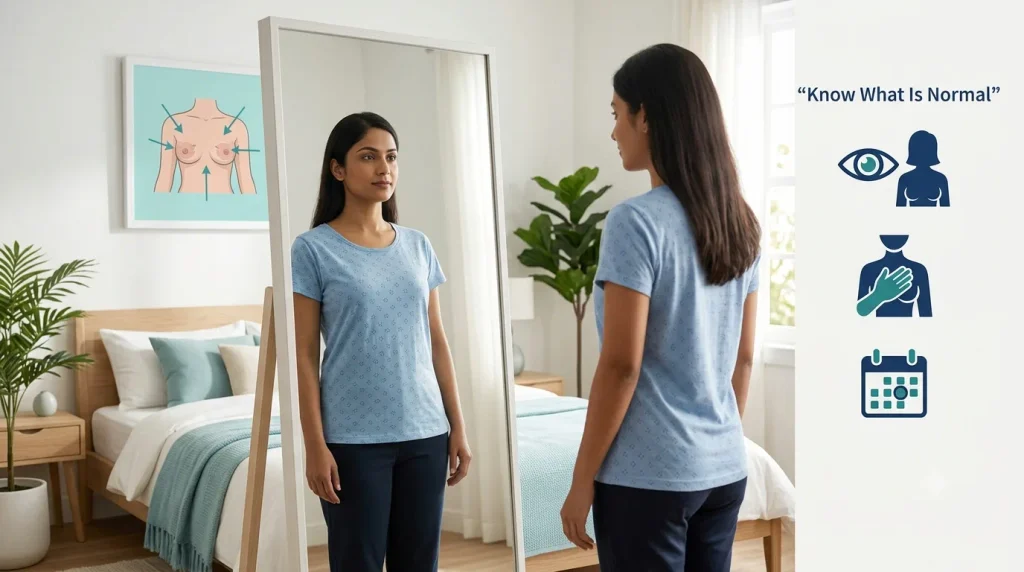
Research has not shown that routine structured self-examination improves breast cancer survival, and it may sometimes lead to unnecessary follow-up testing or biopsies.
However, this does not mean that doctors consider self-awareness or noticing breast changes to be harmful. Instead, the focus has shifted toward breast self-awareness—knowing the normal appearance and feel of your breasts so that you can recognize and report a new or unusual change.
If you prefer a structured self-check, you can discuss an appropriate approach with your healthcare professional. The most important goal is to understand what is normal for you and to seek medical advice when something changes.
How to Practice Breast Self-Awareness
If you prefer a structured approach to breast health, the following steps can help you become familiar with your breasts and understand your normal appearance and feel.
Timing
You do not need to follow a strict monthly self-examination schedule for breast cancer screening. If you menstruate, you may find it easier to notice your normal breast texture at a time when hormonal tenderness and swelling are lower, often a few days after your period ends.
If you do not have menstrual periods, you can simply pay attention to your breasts regularly as part of your breast health routine and choose an easy-to-remember date if you prefer a structured approach.
Step 1: Look in the Mirror
Stand comfortably in front of a mirror with your shoulders relaxed and your arms by your sides. Look for any new changes in:
- Breast size or shape
- Skin appearance
- Swelling
- Visible distortion
- Nipple position
- Skin texture
Natural differences between the two breasts are common, so they do not necessarily need to look exactly the same.
Step 2: Raise Your Arms
Raise your arms above your head and observe the breasts again. Pay attention to changes such as:
- Dimpling
- Puckering
- Unusual swelling
- Skin thickening
- Changes in skin texture
- New changes in breast contour
Step 3: Notice Nipple Changes
Pay attention to any unusual nipple changes, including:
- New inward turning of the nipple
- Scaling or persistent irritation
- Redness
- Unusual discharge
Nipple discharge can have several causes and is not automatically a sign of cancer. However, new or unusual discharge—particularly bloody or spontaneous discharge—should be discussed with a healthcare professional as part of maintaining good breast health.
Step 4: Gently Feel the Breast Tissue
If you are comfortable doing so, you can gently feel your breast tissue using the pads of your fingers.
You may check your breasts while standing, sitting, or lying down. Some people find it easier to notice changes in the shower when the skin is wet. If you prefer a structured technique, examine the breast tissue systematically and include the area near the armpit as part of regular breast health awareness.
The goal is not to diagnose a medical condition yourself. Instead, the purpose is to become familiar with your normal breast tissue so that a new or unusual change is easier to recognize.
Step 5: Check the Underarm Area
Breast tissue extends toward the underarm area, so pay attention to any new lump or swelling there as part of maintaining breast health. A new underarm lump can have many causes and does not automatically mean cancer, but it should be evaluated by a healthcare professional if it is persistent, unusual, or concerning.
Know Your Breasts and Their Normal Pattern
One useful breast health habit is becoming familiar with the normal texture and appearance of different areas of your breasts. Some women naturally have breasts that feel lumpy, uneven, or more textured in certain areas. Breast tissue can also change during the menstrual cycle, pregnancy, breastfeeding, menopause, and other hormonal stages.
The most important question is:
“What is normal for me?”
Understanding your usual breast appearance and texture can make it easier to recognize a new or unusual change.
Warning Signs That Should Be Evaluated by a Doctor
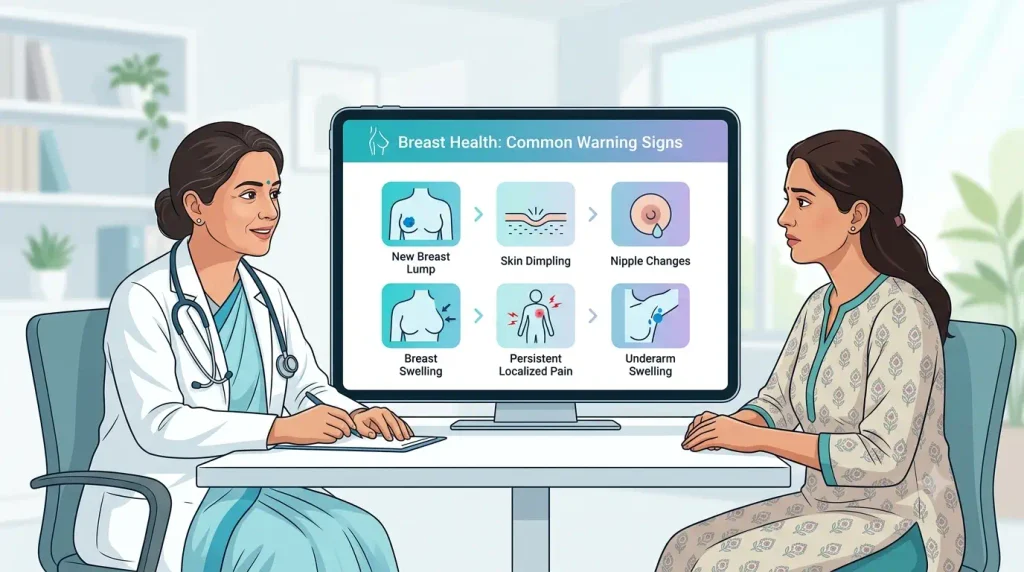
Not every breast change is cancer. However, certain changes deserve medical attention. Watch for:
- New lump: A new lump or thickened area in the breast or underarm
- Skin changes: Dimpling, puckering, persistent redness, thickening, or an orange-peel-like appearance
- Nipple changes: New inward turning, scaling, irritation, or unusual discharge
- Size or shape changes: Unexplained swelling or a noticeable change in one breast
- Persistent pain: Ongoing or worsening pain in a specific area of the breast or nipple
- Underarm changes: A new lump or swelling in the underarm
Most breast lumps are not cancerous. Hormonal changes, cysts, fibroadenomas, fibrocystic changes, or previous injury can cause breast lumps or tenderness.
However, a new or unexplained change should not be self-diagnosed. If you notice something unusual, contact a qualified healthcare professional for appropriate evaluation as part of maintaining good breast health.
What to Do If You Find a Breast Lump
Finding a breast lump can be frightening, but try not to assume that it is cancer.
1. Stay Calm
Many breast lumps are benign, meaning they are not cancerous. Anxiety is understandable, but a lump alone cannot tell you its cause.
2. Contact Your Doctor
If you notice a new or concerning lump or breast change, contact a healthcare professional. Do not rely solely on waiting for the change to disappear.
3. Get the Appropriate Evaluation
Your doctor may ask about your symptoms and medical history and perform a physical examination. Depending on your age, symptoms, and risk factors, they may recommend diagnostic imaging such as an ultrasound or mammogram to support your breast health evaluation.
4. Ask Questions
Ask your doctor to explain the possible cause of the lump and what the next steps are. If you remain uncertain or uncomfortable with the evaluation, seeking a second medical opinion may also be appropriate.
Breast and Chest Self-Awareness for Transgender and Non-Binary Individuals
Breast or chest tissue can be present in transgender and non-binary individuals, and breast cancer risk can vary depending on factors such as age, hormone therapy, surgical history, remaining breast tissue, family history, and other medical factors. Understanding these individual factors is an important part of personalized breast health and screening decisions. Chest masculinization surgery does not necessarily remove all breast tissue. Therefore, breast or chest awareness and individualized screening discussions may still be relevant after surgery.
Hormone therapy can also cause breast tenderness or changes in breast tissue. If you notice a new or unusual change, discuss it with a qualified healthcare professional. Screening should be individualized according to anatomy, medical history, risk factors, and current clinical guidance as part of a personalized breast health plan.
The Emotional Side of Breast Health
Finding a breast lump or noticing an unusual change can naturally cause anxiety, even when the final diagnosis is benign. Seeking timely medical evaluation can provide reassurance and support better breast health.
This is one reason modern guidance focuses on breast self-awareness rather than creating unnecessary fear around rigid self-examination schedules. Lumpy or uneven breast texture can be common, and many breast changes are not cancer. A balanced approach is therefore important:
Stay aware, but do not assume that every change means cancer.
At the same time, new or persistent changes should not be ignored. Seeking appropriate medical advice can provide clarity and reassurance.
Breast Health Prevention Tips
In addition to breast self-awareness, several lifestyle habits can support overall health and may help reduce breast cancer risk.
1. Stay Physically Active
Regular physical activity is beneficial for overall health and can contribute to maintaining a healthy weight. Walking, cycling, swimming, strength training, yoga, or other enjoyable forms of physical activity can be included in your routine to support overall breast health and general well-being.
Rather than focusing on one specific exercise target, aim for a sustainable level of regular physical activity that fits your lifestyle.
2. Follow a Healthy, Balanced Diet
Focus on a nutrient-rich eating pattern that includes:
- Fruits
- Vegetables
- Whole grains
- Legumes
- Nuts and seeds
- Lean or other healthy protein sources
No single food can guarantee protection against breast cancer. Overall dietary quality is more important than relying on a specific “superfood.”
3. Maintain a Healthy Weight
Maintaining a healthy body weight becomes particularly important after menopause because excess body fat can affect hormone levels and is associated with an increased risk of certain breast cancers. Maintaining a healthy weight can therefore be an important part of supporting long-term breast health.
A balanced diet and regular physical activity can support healthy weight management.
4. Limit Alcohol
Alcohol consumption is associated with an increased risk of breast cancer. Limiting alcohol or avoiding it altogether can therefore be an important risk-reduction step.
5. Avoid Smoking
Avoid smoking and tobacco products. Not smoking supports overall health and reduces the risk of several serious diseases.
6. Follow Recommended Medical Screening
Talk to your healthcare professional about breast cancer screening based on your age, personal medical history, family history, genetic risk, and other relevant factors to support a personalized breast health plan.
Screening mammography and other recommended medical evaluations are not replacements for breast self-awareness. They serve different purposes and can work together as part of comprehensive breast care.
Breast Cancer Screening: What Age Should Mammograms Start?
Breast self-awareness should not be used as a substitute for recommended breast cancer screening. Instead, it should be part of an overall breast health approach that includes appropriate screening and timely medical evaluation when changes occur. Depending on individual risk, breast cancer screening may involve:
- Mammography
- Clinical evaluation
- Ultrasound when medically indicated
- MRI for certain higher-risk individuals
Screening recommendations vary between medical organizations and may also differ according to individual risk.
For average-risk individuals, current ACOG guidance recommends beginning screening mammography at age 40, with screening every 1 or 2 years based on shared decision-making. Other organizations have somewhat different recommendations, so it is important to discuss your personal screening schedule with your healthcare professional.
Why Is Breast Cancer Risk Assessment Important?
Risk assessment helps identify people who may have a higher-than-average risk of breast cancer.
The American College of Radiology recommends that women undergo breast cancer risk assessment by age 25 so that individuals at higher risk can be identified and appropriate screening strategies can be considered as part of personalized breast health care. Risk factors may include:
- Family history
- BRCA1 or BRCA2 and other genetic mutations
- Personal medical history
- Previous breast conditions
- Previous chest radiation
- Age
- Breast density
- Other individual risk factors
People with a higher risk may need earlier or more frequent screening and, in some cases, additional imaging such as MRI.
What Does Dense Breast Tissue Mean?
Dense breast tissue is a common finding on mammograms. Dense tissue can make it more difficult to identify some cancers on a mammogram and is also associated with an increased risk of breast cancer.
If your mammogram report mentions dense breasts, discuss the result with your doctor. They can determine whether additional imaging or a different screening strategy is appropriate based on your overall risk.
Non-Cancerous Breast Conditions That Can Cause Confusion
Breast health discussions can sometimes become confusing because several benign conditions can cause symptoms that may feel alarming.
Fibrocystic Changes
Fibrocystic changes can cause breast tissue to feel lumpy or tender, particularly around certain phases of the menstrual cycle.
Breast Cysts
Breast cysts are fluid-filled sacs that can develop within breast tissue. Some cysts can change in size or tenderness during the menstrual cycle.
Fibroadenomas
Fibroadenomas are generally benign breast tumors that can feel smooth and movable. They are relatively common, particularly among younger women.

Injury or Trauma
An injury or trauma to the breast can temporarily cause swelling, tenderness, or changes in the affected area. Although these conditions can be benign, a new or unexplained breast change should still be evaluated when appropriate as part of maintaining good breast health.
Myth vs. Fact
Myth: A lump is the only warning sign of breast cancer.
Fact: Breast cancer can also cause changes in the skin, nipple, breast size or shape, swelling, or other unusual changes.
Myth: If there is no family history, there is no reason to worry about breast cancer.
Fact: Having a family history can increase risk, but breast cancer can also occur in people without a known family history. Risk assessment and appropriate screening remain important.
Myth: Every breast lump is cancer.
Fact: Many breast lumps are benign. Hormonal changes, cysts, fibroadenomas, fibrocystic changes, and other non-cancerous conditions can cause lumps.
Myth: Skipping a formal monthly self-exam means ignoring breast health.
Fact: Modern guidance focuses on breast self-awareness for average-risk individuals—knowing what is normal for you and reporting new or unusual changes.
Myth: Breast self-awareness replaces mammography.
Fact: Breast self-awareness and mammography serve different purposes. Being familiar with your breasts should not replace recommended breast cancer screening.
FAQs
Q1. What is the best time to perform a breast self-exam?
Routine monthly breast self-examination is not recommended as a standalone screening method for average-risk women. Instead, focus on breast self-awareness and knowing what is normal for you as an important part of maintaining good breast health.
If you menstruate, you may find it easier to understand your normal breast texture when hormonal tenderness and swelling are lower, often a few days after your period.
Q2. Is breast self-examination a replacement for a mammogram?
No. Breast self-awareness is not a replacement for mammography. Mammograms are screening tests designed to detect breast cancer before symptoms may become noticeable. Follow the screening schedule recommended by your healthcare professional based on your age and individual risk.
Q3. How quickly should I see a doctor if I find a breast lump?
If you notice a new or concerning breast lump, contact a healthcare professional for evaluation. You do not need to assume that the lump is cancer, but you should not rely on waiting for an entire menstrual cycle to see whether it disappears.
Q4. Are lumpy breasts always abnormal?
No. Many women naturally have uneven or lumpy breast tissue. Hormonal changes can also affect breast texture. The important point is to understand what is normal for you and report new or unusual changes.
Q5. Can lifestyle changes really reduce breast cancer risk?
Healthy lifestyle habits such as regular physical activity, maintaining a healthy weight, limiting alcohol, and avoiding smoking can contribute to lower breast cancer risk. However, no lifestyle change can guarantee that breast cancer will be prevented.
Q6. At what age should mammogram screening begin?
Screening recommendations depend on age and individual risk. Current ACOG guidance recommends starting screening mammography at age 40 for average-risk individuals, with the screening interval determined through shared decision-making.
People at higher risk may need an earlier or more intensive screening strategy.
Q7. Is breast pain always a warning sign?
No. Breast pain can have many causes, including hormonal changes, cysts, injury, or other benign conditions. However, persistent, localized, worsening, or otherwise unusual breast pain should be discussed with a healthcare professional.
Q8. Should young women in their 20s think about breast health?
Absolutely. Breast self-awareness can be developed at any age. Formal breast cancer screening depends on age and individual risk factors, but understanding what is normal for your body can help you recognize changes and seek appropriate medical advice.
Q9. Is breast self-awareness important during pregnancy or breastfeeding?
Pregnancy and breastfeeding naturally cause significant changes in breast tissue, which can make self-assessment more difficult.
Breast awareness can still be useful, but a new lump, persistent pain, unusual redness, or another concerning change should not automatically be attributed to pregnancy or breastfeeding. Discuss any concerns with your healthcare professional.
Conclusion
Breast Health is not a one-time checklist. It is an ongoing part of self-awareness, preventive care, and overall women’s health. Knowing how your breasts normally look and feel, recognizing unusual changes, maintaining healthy lifestyle habits, and following recommended screening guidelines can all contribute to a comprehensive approach to breast care. The most important message is simple:
Do not panic, but do not ignore unusual breast changes either.
If you notice a new lump, unexplained skin or nipple changes, swelling, or persistent localized pain, speak with a qualified healthcare professional for appropriate evaluation.
Remember that breast self-awareness is not a replacement for recommended screening. Your screening plan should be based on factors such as age, family history, genetic risk, breast density, personal medical history, and other individual considerations.
Breast health is a lifelong habit. The more familiar you are with your body, the easier it can be to recognize a genuine change and discuss it confidently with your healthcare professional when necessary.
Medical Disclaimer: This article is intended for general educational purposes only and is not a substitute for professional medical advice, diagnosis, or treatment. If you notice any new, persistent, or concerning breast symptoms or changes, consult a qualified healthcare professional for appropriate evaluation.
One Response