
How to improve male fertility is an important question for couples who are planning a pregnancy and want to understand how they can support their chances of healthy conception. Fertility is not only awoman’s responsibility. Male factors can also play a significant role in infertility.
If you are wondering how to improve male fertility, the first thing to understand is that fertility does not depend on a single factor. Sperm count, motility, morphology, hormones, lifestyle, diet, sleep, medical conditions, and environmental exposures can all influence reproductive health.
In this beginner-friendly guide, we will discuss ways to improve male fertility, fertility tests, diet, exercise, sleep, stress management, heat exposure, pregnancy planning, and when to consult a medical professional.
What Is Male Fertility?
To understand male fertility, it is helpful to know about three important sperm parameters:
- Sperm count — the number of sperm present in semen.
- Sperm motility — the ability of sperm to move or swim effectively.
- Sperm morphology — the shape and structure of sperm.
Having a normal sperm count alone does not guarantee normal fertility. Sperm motility and morphology are also important factors involved in conception. If you want to understand how to improve male fertility in practical terms, it is important to consider these sperm parameters along with overall health and reproductive function.
Male infertility is generally considered when a couple is unable to achieve pregnancy despite regular, unprotected intercourse. The appropriate time for evaluation can vary depending on individual circumstances.
Infertility and sterility are also not exactly the same terms. Infertility generally refers to difficulty achieving pregnancy, while sterility traditionally refers to the inability to achieve conception.
Common Causes of Male Infertility
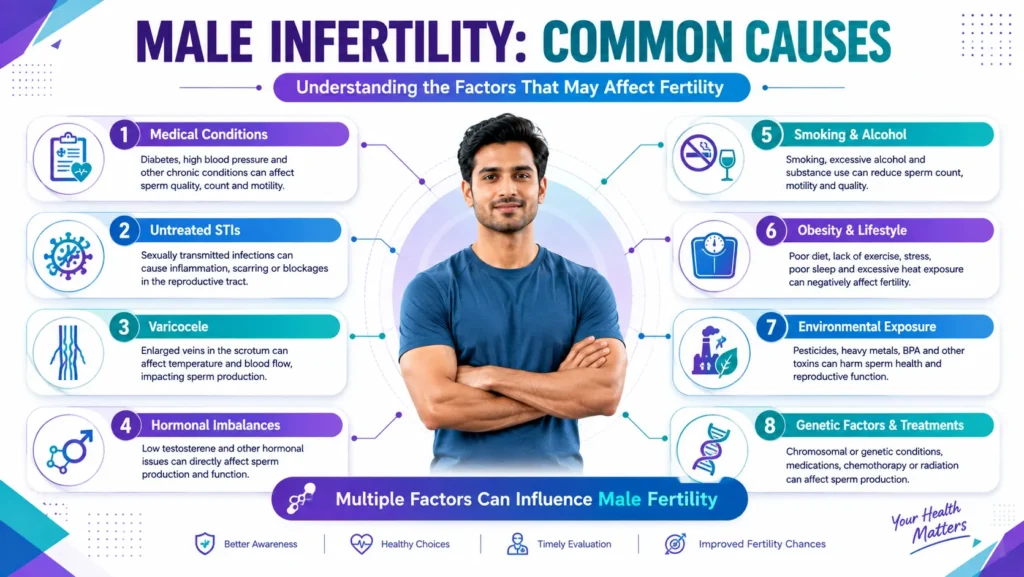
Several different factors can affect male fertility.
Medical Conditions
Diabetes, high blood pressure, obesity, and other chronic health conditions may affect overall reproductive health. Having one of these conditions does not necessarily mean that conception is impossible, but proper medical management can be important.
Untreated STIs
Some sexually transmitted infections (STIs) can cause inflammation, scarring, or blockages in the reproductive tract. Timely testing and appropriate treatment can help protect reproductive health.
Varicocele
A varicocele is an enlargement of the veins within the scrotum. In some men, it may affect sperm production or sperm quality.
Hormonal Imbalances
Hormonal problems, including certain testosterone-related disorders, can influence sperm production. Hormonal treatment should not be started without appropriate medical advice.
Lifestyle Factors
Smoking, excessive alcohol consumption, obesity, chronic stress, poor sleep, and prolonged heat exposure may negatively affect male reproductive health.
Age
Male fertility is generally less predictable in its age-related changes than female fertility. However, sperm quality and sperm DNA integrity may change with increasing age.
Environmental Exposure
Exposure to pesticides, certain industrial chemicals, heavy metals, and substances such as BPA may be potential concerns for reproductive health.
Genetic Factors
Certain chromosomal or genetic conditions can affect sperm production. In some cases, specialist evaluation and genetic testing may be recommended.
Medicines and Medical Treatments
Some medicines, chemotherapy, and radiation therapy can temporarily or permanently affect sperm production. If you are planning a pregnancy, inform your doctor about your current medications and previous treatments.
Signs of Possible Male Fertility Problems
Male fertility problems do not always cause obvious symptoms. However, certain signs may indicate that medical evaluation could be useful:
- Noticeably reduced libido or sexual desire
- Erectile dysfunction
- Testicular pain or swelling
- Noticeable changes in the testicles
- Known varicocele
- Previous STI history
- Known hormonal or chronic medical conditions
- Difficulty achieving pregnancy despite regular unprotected intercourse
If you are searching for how to improve male fertility and have any of these concerns, relying only on supplements may not be the best approach. A proper medical evaluation can help identify the underlying cause.
Male Fertility Test: What Is a Semen Analysis?
A semen analysis is one of the commonly used tests for evaluating male fertility. It generally assesses sperm count, motility, and morphology.
Preparation for Semen Analysis
Follow the preparation instructions provided by your doctor or laboratory. Common instructions may include avoiding ejaculation for a specific number of days before providing the sample. Tell your doctor about any recent fever, illness, medication changes, or other relevant health conditions.
One semen analysis may not always provide a complete picture of fertility. If the results are abnormal or concerning, your doctor may recommend repeat testing.
What Else May a Doctor Evaluate?
A fertility evaluation may include discussion of:
- Medical history
- Current medications
- Smoking and alcohol use
- Exercise habits
- Sleep patterns
- Sexual history
- STI history
- Family history
- Previous surgeries
- Testicular conditions
If semen parameters are abnormal, additional tests may be recommended depending on the suspected cause.
How to Improve Male Fertility With Diet?
One important part of understanding how to improve male fertility is maintaining a balanced and nutritious diet. Sperm production is a complex biological process that requires various nutrients, so an overall healthy dietary pattern can support reproductive health.
Antioxidant-Rich Food
Fruits, vegetables, nuts, and seeds provide antioxidants and other nutrients. A balanced diet may help support the body’s ability to manage oxidative stress.
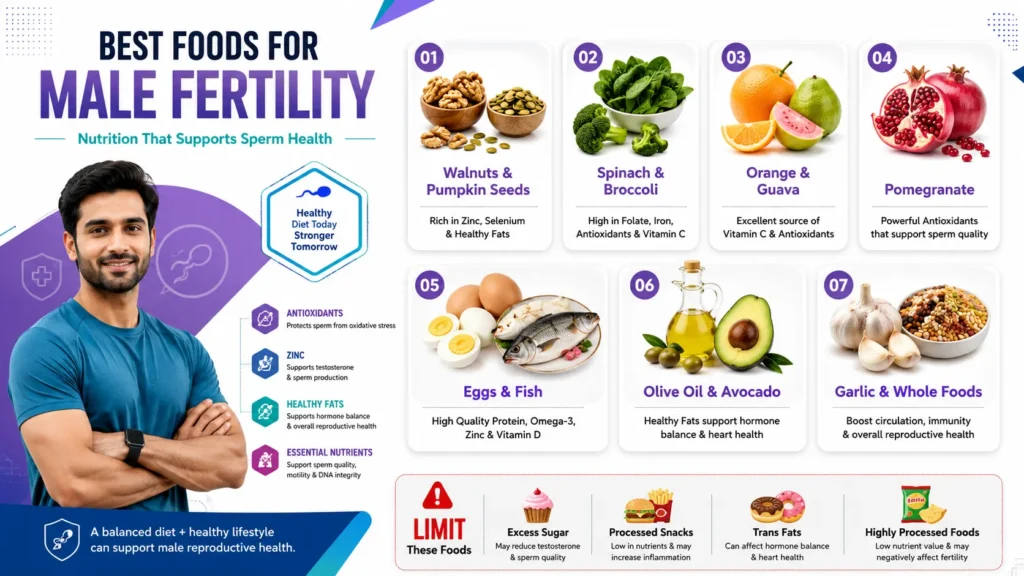
Consider including:
- Oranges
- Guava
- Pomegranate
- Spinach
- Broccoli
- Other green vegetables
- Nuts
- Seeds
Healthy Fats
Healthy fat sources such as olive oil, avocado, nuts, and certain fish can contribute to a balanced nutritional pattern.
Zinc and Essential Nutrients
Eggs, fish, seeds, legumes, and green vegetables can provide various essential nutrients. Zinc is an important mineral involved in normal physiological functions and reproductive health.
Supplements should not automatically be considered a replacement for a balanced diet.
Walnuts
Walnuts can be included as part of a fertility-friendly dietary pattern. Some research has reported potential associations between walnut consumption and certain sperm parameters.
However, no single food should be considered a treatment for infertility.
Limit Highly Processed Foods
Excessive intake of highly processed foods, added sugars, and unhealthy dietary patterns should be limited as part of an overall healthy lifestyle.
If you are looking for a natural approach to how to improve male fertility, improving your overall dietary pattern is more sensible than relying on one so-called “fertility food.”
Fertility-Friendly Diet Chart
| Category | Foods |
|---|---|
| Nuts & Seeds | Walnuts, pumpkin seeds |
| Vegetables | Spinach, broccoli, green leafy vegetables |
| Fruits | Orange, guava, pomegranate |
| Protein | Eggs, fish, lean meat |
| Healthy Fats | Olive oil, avocado |
| Other Foods | Garlic, minimally processed whole foods |
| Limit | Excess sugar, processed snacks, trans fats, highly processed foods |
Your diet should ideally be adjusted according to your individual nutritional needs, medical conditions, allergies, and dietary preferences.
How to Improve Male Fertility With Lifestyle Changes?
Diet is only one part of reproductive health. Lifestyle habits can also play an important role.
Quit Smoking
Smoking can negatively affect sperm count, sperm quality, and motility. Quitting smoking can be an important step for both reproductive and overall health. Reducing exposure to secondhand smoke may also be beneficial. If you are following practical steps for how to improve male fertility, consider smoking cessation a priority.
Limit Alcohol Consumption
Heavy alcohol consumption may affect reproductive health and hormone balance. If you drink alcohol, discuss appropriate limits with your healthcare professional, especially when planning pregnancy.
Maintain a Healthy Weight
Overweight and obesity can be associated with hormonal changes that may affect reproductive health. A balanced diet and regular physical activity can support healthy weight management.
Exercise Regularly
Moderate and consistent physical activity can support cardiovascular health, metabolic health, and overall wellbeing. Choose an exercise routine appropriate for your fitness level. Extremely intense training may affect hormonal balance and reproductive health in some individuals.
Manage Stress
Chronic stress can affect overall wellbeing, libido, and sexual health. Trying to conceive can itself become emotionally stressful. Helpful strategies may include:
- Meditation
- Yoga
- Walking
- Breathing exercises
- Adequate rest
- Open communication with your partner
- Professional counselling when needed
Get Quality Sleep
Adequate sleep is important for overall health, hormonal function, and wellbeing. Aim for a consistent sleep schedule and approximately 7–8 hours of quality sleep when appropriate for you. If you regularly experience sleep problems, discuss them with a healthcare professional.
Reduce Prolonged Heat Exposure

If you want practical information on how to improve male fertility, prolonged heat exposure is another factor worth considering. The testicles are located outside the main body cavity, and sperm production is sensitive to temperature. Practical precautions may include:
- Avoid keeping a laptop directly on your lap for prolonged periods.
- Limit frequent or prolonged exposure to very hot baths and saunas.
- Avoid unnecessary prolonged heat exposure.
- Take regular movement breaks during long periods of sitting.
- Follow appropriate safety measures when working in very hot environments.
Heat exposure is not the cause of every fertility problem, so it should be viewed as one part of an overall reproductive-health strategy.
How to Reduce Exposure to Environmental Chemicals?
Complete avoidance of environmental chemicals is not always possible, but unnecessary exposure can sometimes be reduced. Potential sources include:
- Pesticides
- Herbicides
- Paints
- Solvents
- Harsh cleaning chemicals
- Certain fragrances
- Air fresheners
- Some plastics
- BPA-containing products
- Heavy air pollution
If your work involves chemical exposure, follow appropriate workplace safety measures and use recommended protective equipment.
Ayurvedic and Herbal Support for Male Fertility
Herbs such as Ashwagandha, Shilajit, and Safed Musli have traditionally been used in Ayurvedic practices for male reproductive health. Some studies have investigated the potential effects of selected herbs on sperm-related parameters.
However, herbal products should not be considered a replacement for evidence-based infertility evaluation or treatment.
The quality, ingredients, dosage, and safety of herbal supplements can also vary between products. If you are considering an Ayurvedic or herbal supplement while trying to improve male fertility, discuss it with a qualified healthcare professional, particularly if you take medications or have an existing medical condition.
Pregnancy Planning: Timing and Frequency
Regular unprotected intercourse is important when trying to conceive. Having intercourse every 2–3 days throughout the cycle can help ensure that sperm are available during the fertile period. Some couples may also use ovulation tracking to better understand the fertile window. However, predicting ovulation perfectly is not always possible.
Pregnancy planning should not be viewed as the responsibility of only the male or female partner. The health and reproductive factors of both partners can influence conception.
Common Myths About Male Fertility
Myth 1: Infertility Is Only a Woman’s Problem
Fact: Male factors can contribute significantly to infertility. Evaluation of both partners may therefore be appropriate.
Myth 2: A Normal Sperm Count Means Everything Is Fine
Fact: Sperm count is only one parameter. Motility and morphology are also important when assessing semen quality.
Myth 3: Infertility Means Permanent Infertility
Fact: Infertility can have many different causes, and treatment or management options may be available depending on the underlying problem.
Myth 4: Age Only Affects Female Fertility
Fact: Male reproductive parameters can also change with age, although the pattern is different from the age-related decline in female fertility.
Myth 5: Supplements Are the Best Solution
Fact: Supplements may be appropriate in certain situations, but they should not replace a healthy lifestyle, proper medical evaluation, or treatment directed at the underlying cause.
The Emotional Side of the Fertility Journey
Trying to conceive can be emotionally challenging. Stress, frustration, anxiety, and social pressure are possible experiences for couples dealing with fertility concerns. Helpful approaches may include:
- Communicating openly with your partner.
- Avoiding comparisons with other couples.
- Setting healthy boundaries around unwanted family pressure.
- Considering professional counselling when needed.
- Viewing lifestyle improvements as gradual progress rather than expecting immediate results.
Fertility challenges do not define a person’s self-worth or the value of a relationship.
When Should You Consult a Male Fertility Specialist?
The appropriate time to seek fertility evaluation depends on the couple’s individual circumstances. Medical consultation may be particularly important if:
- You have been having regular unprotected intercourse without achieving pregnancy.
- The female partner is 35 or older.
- You have a known varicocele.
- You have diabetes or another chronic medical condition.
- You have a history of an STI.
- You experience testicular pain, swelling, or structural concerns.
- You have previously received fertility-related treatment.
- A semen analysis has shown abnormal results.
If you have already made several lifestyle changes but conception is still difficult, the next step in understanding how to improve male fertility may be a professional fertility evaluation rather than simply adding more supplements.
FAQs About How to Improve Male Fertility
1. How long does it take to improve male fertility?
Sperm production is a continuous biological process, and sperm development takes several weeks. The effects of lifestyle changes are therefore not usually immediate. Depending on your situation, a doctor may recommend repeat semen testing after an appropriate interval.
2. Can changing my diet alone improve male fertility?
Diet is an important part of overall health, but it is not the only factor. Exercise, sleep, smoking cessation, alcohol moderation, stress management, and appropriate medical evaluation may also be important.
3. Does age affect male fertility?
Yes. Male reproductive parameters can change with age, although the effect varies from person to person.
4. Is infertility always permanent?
No. Infertility can have many different causes. Depending on the underlying issue, options may include lifestyle changes, medication, surgery, or assisted reproductive techniques.
5. We have only been trying for three months. Is that normal?
Not achieving pregnancy after three months does not automatically mean infertility. The appropriate time to seek evaluation depends on factors such as the age and health of both partners and their individual circumstances.
6. Should both partners make lifestyle changes?
Ideally, yes. Healthy lifestyle habits can benefit both partners, and conception is a shared journey.
7. Can stress affect male fertility?
Chronic stress can affect overall wellbeing, libido, and sexual health. Managing stress can therefore be a useful supportive part of the fertility journey.
8. Could IVF, IUI, or ICSI be options?
Depending on the cause of infertility and the couple’s individual circumstances, assisted reproductive techniques such as IUI, IVF, or ICSI may be considered. A fertility specialist can explain which options may be appropriate.
9. Can varicocele be treated?
In selected cases, treatment for varicocele may be considered. The decision depends on factors such as symptoms, clinical findings, fertility goals, and semen parameters.
10. What should I do if lifestyle changes do not help?
If difficulty conceiving continues despite lifestyle improvements, professional fertility evaluation may help identify possible medical, structural, hormonal, or genetic factors.
How to Track Male Fertility Improvement?
If you are following steps for how to improve male fertility, tracking your progress objectively can be useful.
Baseline Assessment
A baseline semen analysis may be performed based on your doctor’s recommendation.
Follow-Up Testing
If recommended by your doctor, repeat semen analysis after an appropriate interval can help compare sperm parameters over time.
Maintain a Lifestyle Journal
Track:
- Diet
- Exercise
- Sleep
- Smoking
- Alcohol consumption
- Stress
- Heat exposure
This can help you identify patterns and maintain consistency.
Focus on Consistency, Not Perfection
An occasional unhealthy meal or missed workout does not mean that your fertility plan has failed. Maintaining a generally healthy lifestyle pattern is more important than trying to be perfect every day.
Conclusion: How to Improve Male Fertility?
The answer to how to improve male fertility is not one particular food, supplement, or treatment. A healthy approach may include a balanced diet, regular moderate exercise, quality sleep, smoking cessation, responsible alcohol use, stress management, healthy weight management, and reducing unnecessary prolonged heat exposure.
At the same time, if pregnancy is not occurring, semen analysis and appropriate medical evaluation should not be unnecessarily delayed. Most importantly, fertility is a shared journey between both partners. With accurate information, healthy habits, and timely medical guidance, couples can make informed decisions about their reproductive health.
Medical Disclaimer: This article is intended for general educational purposes only. It is not a substitute for diagnosis, prescription, or personalized medical advice. If you have fertility concerns, an abnormal semen analysis, questions about medicines or supplements, or concerns about fertility treatment, consult a qualified healthcare professional.
One Response